

Positioning for high-purity demand
Published
May 12, 2026

The following special feature article is provided by gasworld.com, a leading publication covering the industrial gas industry. This feature explores how Diversified CPC is investing in infrastructure, purification technology, and supply chain expansion to support growing demand for high-purity gases.
Special Feature
Positioning for high-purity demand
Molly Burgess speaks to David Burks, President and CEO of Diversified CPC International, about how supply chains, location, and purity demands are redefining growth in high-spec gas markets.
TABLE OF CONTENTS
How high-purity hydrocarbon gases are produced
The high-purity gases market is growing rapidly, largely driven by the electronics sector. Demand is rising across the region, but location and timing remain critical to investment success.
When it comes to the high-purity and specialty gas space, Diversified CPC International, a propellant, hydrocarbon refrigerant, and specialty gas manufacturer, says the Gulf Coast is favorable in terms of demand, but also for export.
In October 2024, the company opened a new NGL processing plant in Beaumont, Texas, one of the three cities that make up the “golden triangle,” an industrial and energy hub within the US Gulf Coast.
The timing comes as the global high-purity gases market is projected to reach around $52.8bn by 2030, growing at a compound annual growth rate of around 7.1%, with semiconductor and electronics manufacturing continuing to drive a significant sh
are of demand.1
But market demand projections alone aren’t enough; there are other factors to weigh up. In high-purity gases, access to feedstocks, transport links, and nearby industrial customers can be as important as the size of the market itself.
“In the Gulf Coast, we have access to NGL pipelines and one of the largest rail terminals in the region – Iron Horse Terminals, which provides daily rail switching and access to two Class-One railroads,” David Burks, President and CEO of Diversified CPC, tells gasworld.

The investment also reflects a broader shift in the company’s strategy. Diversified CPC was historically focused on aerosol propellants but it began expanding its higher-purity hydrocarbon gases into additional markets in 2016, targeting growth applications.
“Over the past decade, the company has shifted from a primarily
aerosol propellant business towards a more diversified high-purity specialty gas portfolio,” Burks says. “While aerosol remains a core segment, much of our recent growth has come from expanding into additional higher-purity applications.”
The Texas plant was a multi-year, multi-phase project; construction began in 2020 and was completed in 2024.
“It is our second NGL processing plant [the first in Illinois] and the company’s fourth fractionation system. The facility is intended to support regional supply by increasing operational and logistical flexibility.”
The Beaumont facility processes natural gas liquids into high-purity hydrocarbon products through a multi-step purification process, removing contaminants and certifying each batch to meet specific customer requirements.
The site includes a two-tower high-purity NGL fractionation system, along with a process heater, molecular sieve towers, gas refrigeration systems, and mercury removal units. It also has an on-site laboratory and a large-scale fire protection system, supplied by a six-million-gallon reservoir with a capacity to disperse up to 11,000 gallons per minute.
High-purity levels are vital in a range of end markets. In semiconductor manufacturing, for example, ultra-high-purity gases are used in processes such as wafer etching and chamber cleaning, while in refrigeration and other applications, even trace contaminants can affect system performance and efficiency.
Eighteen months on from start-up, how is the site performing?
“We have onboarded new customers, demand has increased, and we have plenty of room for expansion when needed,” Burks says, adding that there is capacity for additional operations.
The site was developed not only to add processing capacity, but also to strengthen the company’s wider supply chain. In addition to providing greater operational and logistical flexibility in the Gulf Coast, Burks says it also adds redundancy alongside Diversified CPC’s Illinois operation and broader US network.
While the business primarily serves North America, the facility also supports regional supply while maintaining export capability and allows for further storage and expansion as demand develops.
In addition to expanding production capacity, Burks says investment in research and development (R&D) is becoming increasingly important as purity requirements tighten across end markets.
To support this shift, Diversified CPC last year opened The Power of Purity Innovation Center, designed to enable the development, testing, and certification of high-purity products and customized blends.
“The opening of the center is a direct response to customers’ need for high-purity products and customized blends,” Burks says. “It’s a natural expansion of our evolution as a company.
“As we’ve expanded into new markets, we’ve needed a space that supports working more closely with customers, as well as carrying out analytical testing, certification, and R&D at a larger scale.”
The investment reflects a broader change in how specialty gas suppliers compete. As specifications tighten across applications, analytical capability and product development are becoming as important as production capacity itself, particularly in sectors such as electronics, healthcare, and advanced manufacturing.
Burks points to a growing range of applications driving demand, including semiconductor manufacturing, where gases are used in etching and chamber cleaning processes, as well as biomass extraction and medical uses requiring tightly controlled specifications.
“One of our core competencies is hydrocarbon processing,” he says. “For example, we can take propane from 90% to 95% purity and refine it up to ‘five nines’ purity – 99.999% – for certain applications, including medical uses, scientific calibration gases, and instrumentation gases.”
Looking ahead, Burks expects growth to continue from outside the company’s traditional aerosol propellant business, driven by expanding demand across specialty gas applications.
“We know that growth will come primarily from outside the traditional aerosol propellant market that we’ve historically served, so we need to prepare for this,” he says. “We are going to prioritize our strategic planning process, which we spend significantly more time on today than we did five or six years ago.”
This includes new and emerging applications where higher-purity gases can improve operational efficiency, reduce downtime, and extend equipment life.
There is also an environmental element here, too. In markets such as refrigeration, for example, higher-purity hydrocarbon gases can also contribute to improved environmental performance.
“There has been a strong and growing focus on higher purity and what it can do for customers. Ultimately, it helps make products last longer and operate more efficiently. For example, in refrigeration applications, much of the equipment today operates using hydrocarbon refrigerants,” Burks adds.
“In many applications, higher-purity products can also have a positive impact on sustainability efforts.”
At the same time, he points to regulatory developments, tariffs, and geopolitical factors as ongoing considerations, particularly as they continue to influence raw material costs.
“The geopolitical landscape has had a noticeable impact on raw material prices,” Burks says, adding that the company is taking a more proactive approach to monitoring and responding to regulatory change.
Against this backdrop, he says the focus remains on aligning production, supply chains, and product development with evolving customer requirements, as demand for higher-specification gases continues to accelerate.
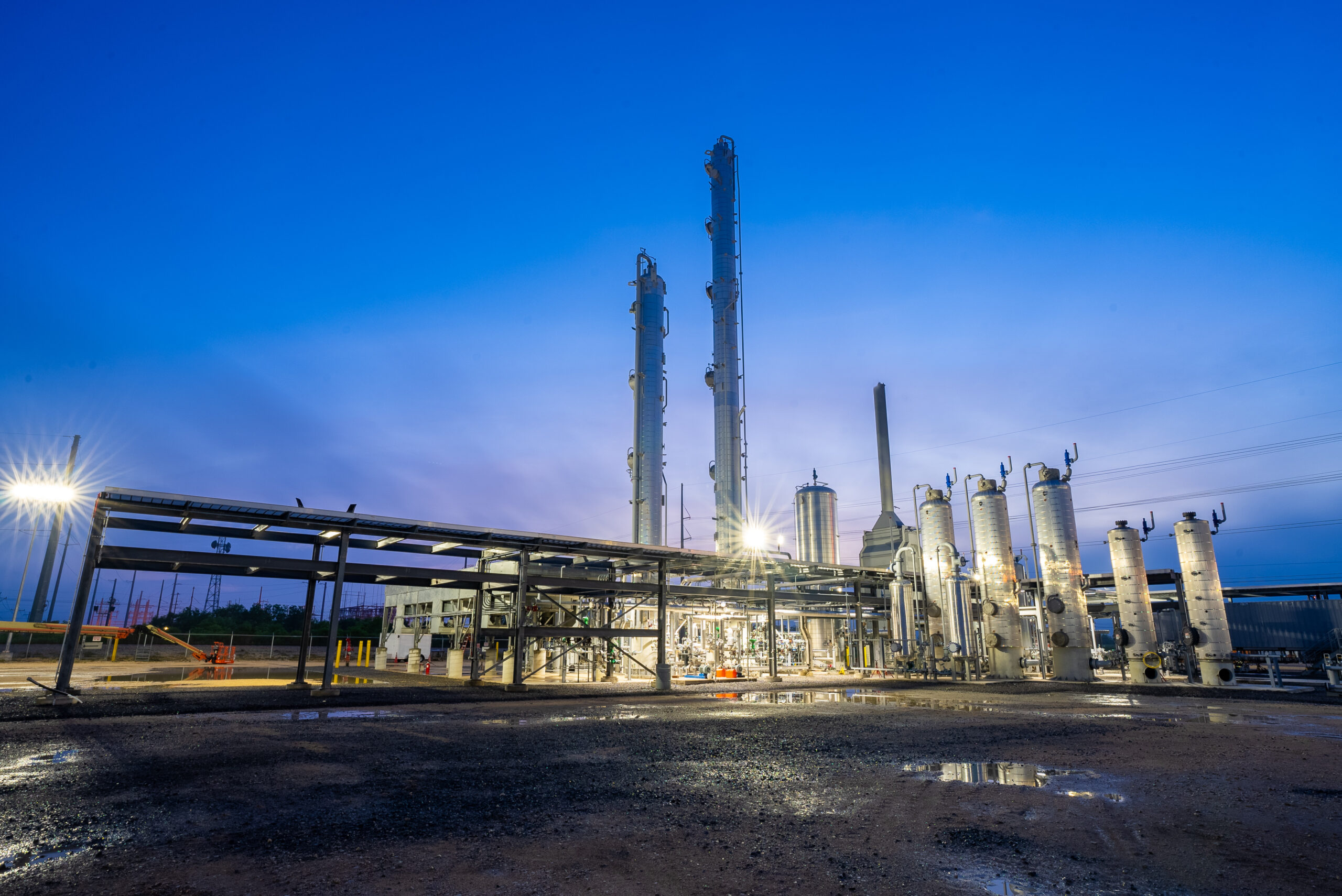
Diversified CPC uses a seven-step process to produce high-purity hydrocarbon gases, designed to remove contaminants and ensure consistent product quality. Here’s its approach:
Market data referenced from MarketsandMarkets™.
Download Special Feature
Learn how Trans-DCE enhances foam blowing agents to improve product performance, optimize processing, and support low-GWP foam formulations.
Read Insights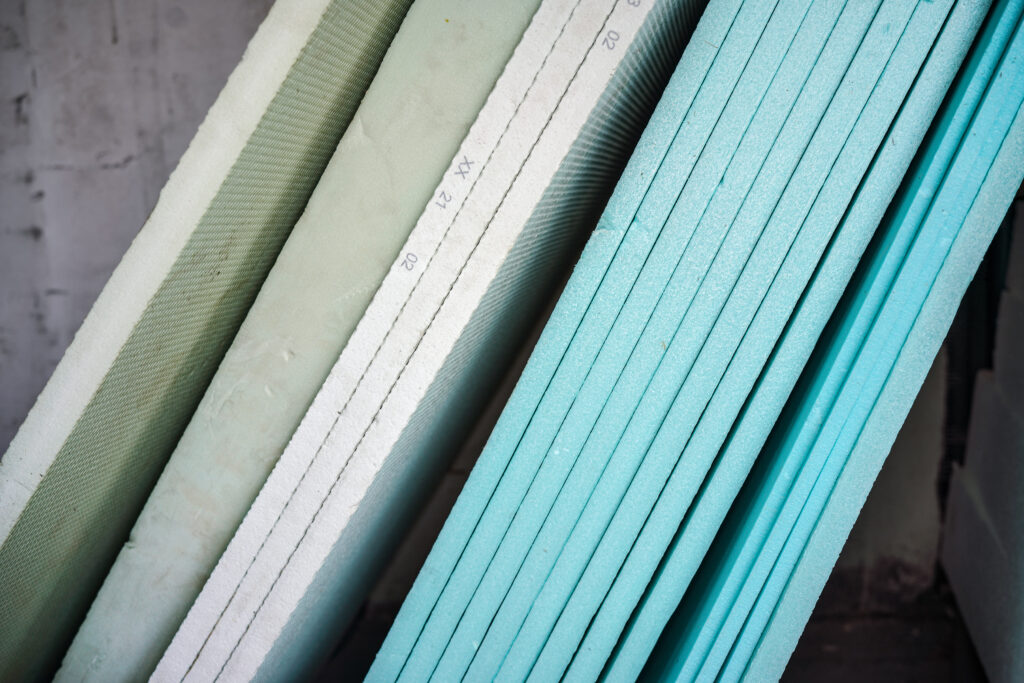
Cyclopentane is the foam blowing agent of choice for energy-efficient insulation in construction and refrigeration. Discover how Cyclopentane improves R-value, reduces energy costs, and supports sustainable building practices. Learn more about Diversified CPC’s high-purity Cyclopentane solutions.
Read Insights
Prepare for the TCE ban with safer alternatives. Learn how Diversified CPC can help your business stay compliant and transition smoothly.
Read Insights